
Gambling is one of the most ancient and most popular forms of entertainment in the world. It is also big business, generating hundreds of billions of dollars in revenue around the world every year. By some estimates, there are more than 2,000 legally operating online casinos. There are also several thousand land-based casinos. If just 5,000 casinos do $1 million business every day, that would mean players gamble about $5 billion each day.
The gaming industry records every game you play and every wager you make. Even so-called “table games” now record everything electronically. Your bets are captured on video camera systems that feed the activity to special algorithms. The algorithms translate your betting activity into numbers for reports.
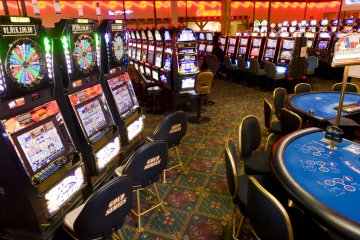
Not every game that looks like a slot machine is really a ‘slot’ machine. Do you know the difference?
As if that isn’t enough, gaming technology has come a long way since the old mechanical game days. Up until the 1960s and 1970s roulette wheels could easily be rigged by gaming parlors. But government regulations and advances in computer technology changed how roulette is played. It’s more honest now.
By the same token, the old mechanical reel slot machines have been replaced by computer-managed slot games. Oh, there are still game cabinets that spin mechanical reels inside them but the spins are controlled by computer chips. And yet most “slot” games today are really “video” games. All the action is electronic, and more entertaining.
Here is a list of other cool things you may not have known about gaming in general.
1. Some Slot Machines Are Really Bingo Games
What’s that you say? How can a slot machine really be a bingo game? That’s all thanks to the Indian Gaming Regulatory Act of 1988. The U.S. Congress was asked to step in and settle legal arguments between Indian reservations and the states that tried to forbid gambling. The Indians demanded that they be granted sovereign rights. The states demanded that they be allowed to regulate gaming within their boundaries.
Congress created a compromise. Certain games would be considered “Class 1” and “Class 2” games, meaning the states could not regulate them. Everything else including blackjack and slot machines fell under “Class 3”. Commercial casinos in places like Las Vegas and New Jersey were allowed to exist because their state laws permit gambling. The IGRA made it impossible for Indian reservations to run slot games unless their respective states allowed them to. The states could still forbid gambling outside the reservations but were free to make tax arrangements with the reservations.
Before the states began to realize just how good gambling was for local economies, a brilliant Tennessee company stepped into the void with a new game technology. VGT Slots marketed games that look like slot machines, even spinning reels, but they work like bingo games. In other words, every VGT Slot machine determines its results on the basis of live play bingo games. This was exactly the compromise that Indian casinos needed.
When players pull the lever or push the button on a Class 2 slot game, the real game is resolved through a “live call” bingo network. Once the bingo game has determine what prize the player has won (if any), the computer chips go to work spinning the reels so they create a pattern that matches the prize.
The players love these games, especially the “red spin” bonus rounds, which don’t exactly work like bingo games.
2. The Casinos Don’t Have to Report All Your Winnings
If you have ever won a big jackpot in a casino, you were probably required to fill out a tax form. This tedious process is required by law for jackpots over a certain amount. But how much can you really win from a casino without ever filling out a tax form?
I asked a few “pro” gamblers how much money they have taken away without paying taxes. One player said he was able to leave a casino with several thousand dollars. No one asked him to fill out a form. “The law says you don’t file paperwork on jackpots under $1,000,” he told me. “I always cash out before I reach $1,000. The cashiers pay off my tickets and I go back and start new games.”
Whether you play blackjack, baccarat, roulette, or the slots, you could win thousands upon thousands of dollars and never have to fill out any paper work. The only secret is that you cannot “let it ride” until your balance is over the limit. Some people say that is $1,000 and some say it’s $1,200.
Caveat: You are still legally required to report all your gambling winnings on your taxes. Just because the casino doesn’t report the winnings doesn’t mean you don’t have to. If you fall behind on your taxes and the I.R.S. comes calling, you better hope they don’t audit your bank accounts and assets.
3. Before Tipping A Dealer, Place A Bet For Him
Dealers are not paid much money by the casinos. They rely on tips from the players. Of course, it’s considered a gambler’s courtesy to share some of the winnings with the casino staff. How much you tip is up to you but they do remember you for being courteous and professional.
Even so, if you’re playing a table game some casinos allow you to declare a bet as a dealer tip. Dealers appreciate the $10 tip but if you can double that into $20 with a bet they’ll appreciate you even more.
When should you tip the dealer? That is up to you. You can do it when you sit down at the table or you can do it as you leave. Just do it openly and state clearly, “This is for the dealer” or “this is for you”. Remember the dealers have to move the money carefully to a designated tip area. They are being watched all the time.
Dealers don’t get to keep tips all to themselves. In most if not all casinos the tips are split evenly by the members of every shift.
4. Gamblers Believe Impossible Things about Casinos
Not everyone who gambles believes nonsense. But there are some people who will believe almost anything. This article for New York Magazine describes players who insist the casinos are cheating them not in unlikely ways but impossible ways. The article was written by a casino dealer. She said that certain players accuse the dealers of cheating on card shuffles.
Maybe that was possible in the old days when dealers really shuffled the cards, but today the cards are shuffled by machines. The dealers just take the cards as they are ejected by the shuffling machines and deal them to players.
Despite what you see in the movies, a dealer would risk going to jail by tampering with a shuffling machine. The dealer isn’t going to get anything for trying. And the casino is already winning most games so why do they need to cheat?
Gamblers also believe casinos move certain slot machines around the floor. These are the so-called “loose slots” that pay really well. Although it’s true the slot games can be set to be a little more generous to players, if the casinos are going to do that they’ll take the machines offline and replace their chips. Moving a slot machine around the floor is more disruptive and obvious.
In reality, random chance is the main factor that determines who wins and loses. You can sit down at a “lucky” table or a “loose” slot machine and lose $1,000 in a few minutes. Or you could make a random $10 bet on a whim at a roulette table and win $350.
5. The Game Must Go On
Working in a casino is a stressful experience, to be sure. You have to stand at your table or walk your section for hours on end. The dealers and servers are trained to watch for cheating. They know they are being watched. They have to take the rude customers along with the polite ones. But most casinos have one paramount rule: keep the games going.
One dealer relates a story about how when a fight broke out at a roulette table, the croupier asked him what she should do. He was required to tell her to spin the ball. One of the fighters received a serious wound to his arm and another casino employee had to hold the arm until EMTs arrived.
Casinos are required by law, insurance companies, and good sense to have evacuation plans. But in most casinos unless there is a general threat to all the patrons the staff keep you focused on your own games while security deal with the problem customers.
The patrons themselves are usually the causes of problems at casinos. Not only are they unruly, sometimes they are unkempt or unhygienic. Casino employees report seeing people doing drugs in the restrooms, soiling themselves as slot machine games, and engaging in sex in hallways and stairwells. These are all inappropriate activities for the gaming areas of resorts, but patrons do them anyway. Casino staff must clean up the messes and move the law-breaking patrons out of the area as quietly and quickly as possible so as not to interrupt other patrons.