
Buying a new home used to be a simple decision. You picked a good neighborhood, found a home in the right price range, and secured financing. Now things are much more complicated as about 80% of all new homes are constructed in planned neighborhoods that are managed by Home Owners Associations. HOAs have earned a reputation for being intransigent about adopting new technologies. They may punish homeowners for installing solar panels, or for planting trees.
These problems can easily be overcome if home builders adopt new strategies and practices for creating communities that are designed to contribute to the fight against global warming. The number 1 cause of global warming is, of course, air pollution. Everyone recognizes the need to manage air pollution from industrial processes to power plants to home air quality.
These economical ideas would make homes more affordable, more appealing to younger generations who are deeply involved in fighting climate change, and help improve the environment.
1 – Install Solar Panels
Not every HOA opposes the installation and use of solar panels. It really comes down to the personal preferences of the community members and their HOA leaders. But homeowners who want to save money and help fight climate change shouldn’t feel constrained by their neighbors’ contrary ideas.
Solar panels help fight global warming and save homeowners money by generating electricity from a renewable source, the sun, which reduces reliance on fossil fuels. Traditional energy production from coal, oil, and natural gas emits a significant amount of greenhouse gases, which contribute to global warming. By using solar panels, homeowners can decrease their carbon footprint, as solar energy production is clean and does not release harmful emissions.
Financially, solar panels can lead to substantial savings for homeowners. Once installed, solar panels provide free energy from sunlight, reducing or even eliminating monthly electricity bills. Over time, this can offset the initial cost of installation, leading to net savings. Additionally, many regions offer incentives such as tax credits, rebates, and net metering, which allows homeowners to sell excess electricity back to the grid, further enhancing the financial benefits. Overall, solar panels provide an eco-friendly and cost-effective solution for energy needs, contributing to the fight against global warming while saving homeowners money.
If homebuilders pre-install solar panels when they plan and build new neighborhoods, acceptance will grow much more quickly. Unfortunately, government incentives for installing solar panels are designed to benefit existing homeowners and they don’t include new neighborhood construction. State and local laws should also be updated to encourage builders to include solar energy in their home designs and construction projects.
2 – Plant Shade Trees
Trees don’t just contribute to the environment. They provide shade for homes and residents, reducing cooling costs. Trees also attract animals and insects, and some homeowners are unhappy about these critters. Understandably, many HOAs restrict or prescribe tree planting, which if done improperly can also lead to eventual property damage. Tree roots may grow into foundations, sidewalks, driveways, and underground infrastructure.
Nonetheless, trees help homeowners fight global warming by absorbing carbon dioxide, a major greenhouse gas, from the atmosphere during the process of photosynthesis. This natural absorption helps reduce the overall concentration of carbon dioxide, mitigating the effects of global warming. Additionally, trees provide shade and release moisture through transpiration, which can lower temperatures around homes, reducing the need for air conditioning.
Financially, trees can save homeowners money by decreasing energy costs. Strategically planted trees can block cold winds in the winter and provide shade in the summer, leading to lower heating and cooling expenses. This natural insulation reduces the reliance on HVAC systems, which in turn lowers energy bills. Furthermore, the presence of trees can increase property values due to the aesthetic appeal and environmental benefits they offer. In summary, trees contribute to the fight against global warming by absorbing carbon dioxide and lowering temperatures, while also providing homeowners with significant energy cost savings.
Unregulated tree planting may not be the best solution. But if homebuilders create a plan for trees from the beginning, their communities’ future residents can enjoy the benefits of trees for generations – and help in the fight against climate change.
3 – Reclaim Water
Communities spend billions of dollars every year on collecting, cleaning, and delivering water to their residents. From federal projects like major dams and reservoirs to local wastewater management systems, all levels of government are involved in processing water to ensure residents have safe, clean drinking water and that it is returned to the environment as cleanly as possible.
However, as populations grow in more arid regions of the country – and as weather patterns change because of climate change – more communities than ever are struggling to meet demand for safe, clean water. But there are two sources of clean water for which relatively inexpensive technology exists. Homeowners can take responsibility for collecting and processing some of their own water. These systems would become more widespread and popular if builders pre-install them.
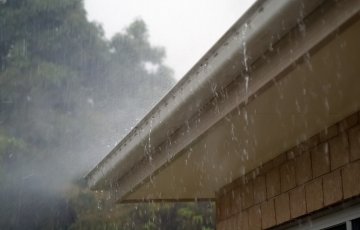
Traditional rainwater management channels the water via gutters into a yard. Home builders can add rainwater harvesting systems to improve efficiency and eco-friendliness of new homes.
Homeowners can reclaim water safely and economically by using both air water generation systems and rainfall collection systems. Air water generation, also known as atmospheric water generation, involves extracting moisture from the air and converting it into usable water. This process uses a dehumidification cycle where air is drawn into the system, cooled to condense the moisture, and then filtered to ensure the water is safe for use. This method is particularly useful in areas with high humidity and can provide a continuous water supply without relying on traditional water sources.
Rainfall collection systems involve capturing and storing rainwater from roofs and other surfaces. The collected rainwater is typically channeled through gutters and downspouts into storage tanks or barrels. These systems can include filters to remove debris and contaminants, making the water suitable for non-potable uses such as irrigation, flushing toilets, and washing clothes. Advanced systems can further purify the water, making it safe for drinking and cooking.
Both methods offer economic benefits by reducing the dependence on municipal water supplies, which can lower water bills. Additionally, they promote sustainable water use and conservation, which is crucial in areas facing water scarcity. By using these systems, homeowners can create a reliable and cost-effective water supply while also contributing to environmental sustainability.
Home builders can speed up the process of adoption by integrating these affordable technologies into their designs and construction proposals.
4 – Native Plant Landscaping and Composting
Landscaping can be quite expensive. But every home with any amount of “yard” has some kind of landscaping. Unfortunately, some homeowners associations require their members to engage in less environmentally-friendly practices when it comes to managing their lawns. Builders can help break down some of these roadblocks by creating attractive, simple landscaping plans that anyone can manage and afford – and which contribute to local ecological balance.
Home builders can prepare new communities to use native plants and composting by designing landscaping plans that prioritize local flora and incorporating composting systems into the community infrastructure. This process begins with thorough research to identify native plant species that are well-adapted to the local climate and soil conditions. These plants typically require less water, fertilizer, and maintenance, making them an environmentally friendly choice. Home builders can collaborate with local horticulturists and landscape architects to develop comprehensive plans that integrate these native species into public and private green spaces within the community.
To promote composting, home builders can include designated composting areas or bins in the layout of each property and communal spaces. Providing homeowners with easy access to composting facilities encourages participation and reduces organic waste sent to landfills. Builders can also offer educational materials and workshops on the benefits and methods of composting, helping residents understand how to effectively recycle kitchen scraps and yard waste into nutrient-rich compost for their gardens.
In addition to individual efforts, community-wide initiatives can be implemented, such as community gardens that utilize composted material and showcase the use of native plants. These gardens can serve as demonstration sites, illustrating the benefits of sustainable landscaping practices. By embedding these principles into the initial design and development phase, home builders can create communities that are not only environmentally sustainable but also foster a sense of responsibility and stewardship among residents. This holistic approach ensures that new communities are well-prepared to adopt and maintain eco-friendly practices from the outset.
5 – Install Energy-efficient Appliances and Cooling Systems
Home builders have already invested heavily in this area. But they could do a bit more by eschewing the least effective appliances and technologies – often chosen simply because of cost.
Home buyers want the best prices possible for their new residences. Understandably, they may be willing to compromise a little bit on the quality and cost of their appliances, cooling and heating systems, and other basic equipment. But in the long run everyone pays extra for these lower-cost, lower-efficiency technologies.
One of the key arguments for buying higher-end energy-saving appliances is that they pay for themselves within a few years. And bundling those costs into relatively low-interest home loans is preferable to buying them in a retail contract which charges a much higher interest rate.
By reducing the amount of electricity a home needs, and increasing the expected lifespan of home technologies, home builders not only help their customers save money they contribute to reduced environmental harm over the long run.
Conclusion
Homeowners and home builders can significantly contribute to combating climate change through a variety of sustainable practices. Homeowners can focus on energy efficiency, water reclamation, and sustainable landscaping. By installing energy-efficient appliances, improving home insulation, and using programmable thermostats, they can reduce their carbon footprints.
Water reclamation can be achieved through air water generation systems and rainfall collection, providing a reliable water supply while reducing reliance on traditional sources. Sustainable landscaping with native plants reduces water and maintenance needs, while composting organic waste decreases methane emissions from landfills.
Home builders can design new communities with these eco-friendly practices in mind. They can create landscaping plans that incorporate native plant species, reducing the need for water and fertilizers. Including composting systems in the community infrastructure and providing educational resources can encourage residents to participate in composting.
And builders can implement community-wide initiatives like gardens that utilize composted material and demonstrate sustainable practices. By integrating these elements from the development phase, home builders can establish communities that are environmentally sustainable and promote a culture of ecological responsibility among residents.